


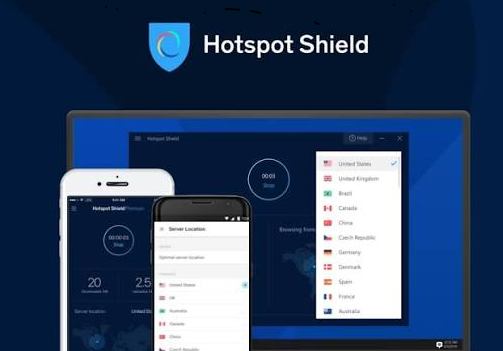
Hotspot Shield gives users two main ways to try the service before committing long term: a free VPN tier with limitations and a Premium option backed by a 45 days money-back guarantee. Depending on device, plan, and access needs, users can test streaming, speeds, servers, and core privacy features without relying on a single fixed trial format.
- What Should You Know Before Trying Hotspot Shield?
- Does Hotspot Shield Offer a Free Trial or Just a Free Plan?
- Which Hotspot Shield Plan Makes the Most Sense?
- Can You Cancel Hotspot Shield and Get a Refund?
- What Do You Actually Get With Hotspot Shield?
- Which Hotspot Shield Features Stand Out Most?
- Which Devices and Platforms Work With Hotspot Shield?
- How Can You Pay for Hotspot Shield?
- Why Would You Choose Hotspot Shield’s Free VPN?
- What Do Users Commonly Say About Hotspot Shield?
- Can You Trust Hotspot Shield With Privacy and Security?
- Is Hotspot Shield Really Free to Use?
- Is Hotspot Shield a Virus or a Legit VPN?
- How Do You Start Using Hotspot Shield?
From a practical standpoint, I see most confusion coming from trial language rather than product reality. Some users look for a 7 day offer, others expect a 30 day window, and many simply want to know whether the free option is enough. With Hotspot Shield, the more useful frame is whether you want a no-cost entry point, a short evaluation period, or a refundable paid test tied to a purchase date.
In actual use, Hotspot Shield sits in a middle ground that matters more than the marketing label. The service combines a free version, paid subscription choices, broad compatible devices, and recognizable payment options with a setup path that is easy for most people to follow on Windows, Mac, iOS, and Android. That makes the main topic less about a single “trial” and more about how each route fits the way someone uses a VPN.
What Should You Know Before Trying Hotspot Shield?
Hotspot Shield is worth considering before a trial because the service combines a secure setup, a large user base, and a mix of free and paid paths that serve different needs.
Before anyone worries about whether the offer is a classic trial, the smarter question is what the service actually puts on the table. Hotspot Shield presents itself as a leading world service with millions of users, downloaded hundreds of times over in software terms, and still counting. The pitch leans on great reviews, excellent connection handling, and a fast profile built around the Hydra protocol and Catapult Hydra.
I usually tell people not to overvalue labels like “trial” if the structure already answers the use case. A person who wants private browsing or streaming may care more about whether the app feels privately usable, whether data caps get in the way, and whether the service works in restrictive countries. A buyer focused on price may notice the service is not the lowest, yet still ask whether the features justify what they pay.
There is also a practical distinction between broad reputation and direct evaluation. Security-focused reviewers reviewed and tested the service in 2026, scoring it 8.9 out of 10, while also noting privacy policy issues and the fact that the paid version offers unlimited use, stronger streaming support, and faster performance. In other words, Hotspot Shield invites people to discuss, compare, and buy based on use case rather than hype alone.
Does Hotspot Shield Offer a Free Trial or Just a Free Plan?
Hotspot Shield offers both a limited free plan and a paid route you can test through a refund window, so the answer is not just one or the other.
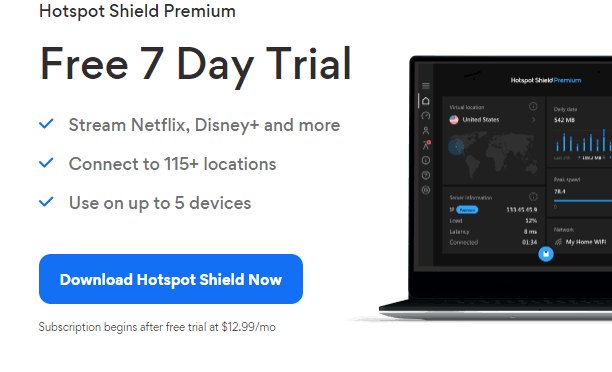
The no-cost route is a real ad-supported free VPN with one device allowed on the basic free setup, while the paid route lets users try Premium access and rely on a refund within 45 days if it does not fit. That distinction matters because some users search for a classic time-boxed trial, but Hotspot Shield instead gives a functional free entry plus a refundable paid experience.
The usable difference appears in the details. The free setup covers Windows, Mac, iOS, and Android, while the paid path extends toward Linux, smart TVs, and routers. On the free side, users may see limited virtual locations, smaller support scope through the support center, and a need to watch ads for continued access. On the paid side, the service expands toward 115+ location reach, 24/7 live chat, broader streaming support, and fewer tradeoffs.
| Option | Basic / Free | Premium | Premium Family |
| Devices | 1 | 5 | 25 |
| Locations | Limited virtual locations | 115+ | 115+ |
| Ads | Watch ads | No ads | No ads |
| Streaming | Limited | Broader | Broader |
| Support | Support center | 24/7 live chat | 24/7 live chat |
Real-world use is where the free structure becomes clear. Testers described four server locations on the free side, including 2 USA locations, Singapore, and London. They also noted an ad lasting 15 seconds to 30 seconds could unlock 15 minutes of use, and repeated ad views could stack into four hours of service after about 10 minutes. That is an unusual model, but for some people it is more useful than a fixed short trial.
Which Hotspot Shield Plan Makes the Most Sense?
The best Hotspot Shield plan depends on how many people and devices need coverage, and whether you need basic access or fully featured Premium use.
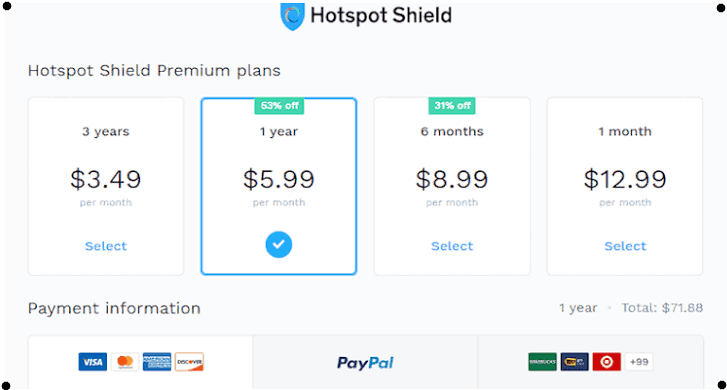
The entry structure breaks into Basic, Premium, and Premium Family, and each one answers a different type of buyer. A solo user may only need one account with five devices, while a household may prefer a family plan designed around five accounts and up to 25 devices. In my experience, people often overfocus on brand messaging and underfocus on the simple math of devices, accounts, and support.
The pricing and capacity differences are what really decide the choice. Basic is $0, Premium is $12.99 monthly or $7.99 with an annual plan, and Premium Family is $19.99 monthly or $11.99 annually. The annual totals listed were $95.88 and $143.88, with reported savings of 38% and 40%. The family structure was framed as only $7 a month more than the individual paid plan, which changes the value equation for homes with several
| Plan | Accounts | Devices | Speed | Data | Price |
| Basic | 1 | 1 | 2 Mbps | 500 MB/day | Free |
| Premium | 1 | 5 | 1 Gbps | Unlimited | $12.99 / $7.99 annual |
| Premium Family | 5 | 25 | 1 Gbps | Unlimited | $19.99 / $11.99 annual |
The less discussed angle is feature fit. Users choosing between these plans are also choosing customer support options, broader number of virtual locations, possible anti-malware, anti-phishing, and Smart VPN functionality. Someone sharing access with five people may value the own account model as much as speed, because separate logins avoid the daily friction that shared credentials usually create.
Can You Cancel Hotspot Shield and Get a Refund?
Yes, Hotspot Shield allows cancellation with a refund window, and that refund period is longer than what some major competitors offer.
The stated period was 45 days from the purchase date, which gives enough room for a meaningful test rather than a rushed check of the interface. For people who worry about buyer’s remorse, that longer runway matters because a VPN often feels different after a week of commuting, hotel use, streaming tests, and ordinary browsing than it does in the first hour.
The comparison also helps anchor expectations. Some competing services such as NordVPN and Surfshark were described as offering 30 days, while CyberGhost was also noted for a 45-day window. That does not make one service universally better, but it does place Hotspot Shield in the more generous part of the market for money-back options.
My observation is that the refund policy is most useful when someone treats the service like a real workflow test, not a demo. If you use the app at home, during travel, with several devices, and under normal streaming or browsing conditions, the full refund window becomes a proper evaluation tool rather than a safety blanket.
What Do You Actually Get With Hotspot Shield?
Hotspot Shield gives users a mix of free and paid access, with device compatibility, plan-based feature changes, and a clear price spread.
At the top level, the service had a listed price range per month from $7.99 to $19.99, depending on tier. It also identified compatible devices that included Windows, Mac, iOS, Android, and Chrome, with Premium plans extending support to Linux, routers, and Smart TVs. That kind of spread matters because trial value changes if your main screen is a laptop, a phone, or a living-room device.
The package is also split by how much capability you want versus how much friction you can tolerate. The free VPN route keeps entry simple, but it brings limited data usage, narrower streaming access, and lighter customer support. Paid access pushes toward stronger speeds, broader device reach, and more consistency for people who need Hotspot Shield beyond casual testing.
A detail many buyers miss is that feature availability can be more important than raw plan names. If someone mainly wants browser-level use on a familiar machine, the simple setup may be enough. If the goal is household-wide coverage or cross-device continuity, the paid structure becomes far easier to justify.
Which Hotspot Shield Features Stand Out Most?
Hotspot Shield stands out most for speed-oriented design, broad location coverage, and features that make daily VPN use less annoying.
The first thing many users notice is reach. Reviewers described servers in more than 80 countries, which matters when people travel or need a predictable way to connected sessions from different places. The second thing is flexibility: dynamic IP addresses, split tunneling, and route control through public internet or protected traffic flows can make a VPN feel practical rather than ceremonial.
A third point is media usability. Testers said Hotspot Shield worked for Netflix, including changed region behavior and access to different content libraries. That will matter more to some users than strict privacy design. Others will focus on whether Hotspot Shield won’t log web activity, whether the app feels stable during torrenting, or whether it handles non-copyrighted material without constant interruption.
- Worldwide availability: access to servers across more than 80 countries helps with travel and regional testing.
- Dynamic IP addresses: rotating addressing can reduce easy tracking of identity across sessions.
- Smart VPN: the service includes split tunneling so some internet traffic can move outside the VPN when that is more practical.
- App usability: testers highlighted a user-friendly app on iOS and Android, including store ratings of 4.5 and 4.1 across Apple and Google Play stores.
From practice, I would add that the underrated feature is not a headline feature at all. It is the way a VPN handles boring moments: switching networks, opening a laptop at home, loading media while waiting at CVS, or deciding which apps really need encryption and which do not.
Which Devices and Platforms Work With Hotspot Shield?
Hotspot Shield works across the major consumer platforms, with the broadest coverage available on paid tiers.
The basic compatibility set includes Windows, Mac, iOS, Android, and Chrome, which already covers how most casual users first test a VPN. Reviewers also tested it on laptops, and the service was presented as working across a full list of common devices and browsers without much confusion for the average user.
The more important distinction is what shifts on higher tiers. Premium plans only extend to Linux, routers, and Smart TVs, which means a user who wants whole-home coverage or non-phone use should check plan limits before assuming all platforms get the same treatment. That is a common mismatch between search intent and actual setup.
In practical terms, compatibility is not only about installation. It is also about whether your preferred platform gets the same speed, location selection, and support experience. A VPN that technically installs everywhere but works best on only one device is less useful than the label suggests.
How Can You Pay for Hotspot Shield?
Hotspot Shield supports several mainstream payment methods, which makes paid signup straightforward for most users.
For a Premium subscription, the listed payment options included Visa, Mastercard, American Express, JCB, Discover, PayPal, and Diner’s Club International. That spread is useful because VPN buyers often compare billing flexibility alongside features, especially when testing a service during a refundable period.
In my experience, payment breadth is not exciting, but it reduces friction at the exact moment people decide whether to try a plan. If signup is easy, the real decision returns to device support, refund timing, and how the service behaves under ordinary use rather than edge-case testing.
Why Would You Choose Hotspot Shield’s Free VPN?
Hotspot Shield’s free VPN makes sense for users who want a no-cost way to test secure browsing before deciding whether paid access is necessary.
The free tier is positioned around Military-grade encryption, advanced encryption technology, and a patented Hydra protocol that aims for unrivaled speed and stable performance. Hotspot Shield also frames the service around Ultra-fast VPN servers, which is important because slow free VPNs usually fail before privacy questions even matter.
Another reason the free path gets attention is platform flexibility. The product messaging says it supports all devices and keeps users covered, even though actual plan limits still matter in practice. A free service that feels fast on day one can be more persuasive than a longer trial that performs badly.
The bigger reason to choose it, though, is diagnostic. A no-cost VPN lets users check whether encrypted browsing, basic location switching, and device compatibility solve the real problem before they commit money to a longer-term setup.
What Do Users Commonly Say About Hotspot Shield?
Users commonly describe Hotspot Shield as fast, easy to live with, and less disruptive than many VPNs during everyday use.
The feedback highlighted speed, excellent playback, and a lack of lingering issues in long-term use. One user, William T., described years of use and said the service could stream HD without trouble. Another perspective emphasized that the app worked silently in the background without slowing down a laptop, which is exactly the kind of lived detail buyers usually care about more than spec sheets.
Performance comments also pointed to fewer media interruptions. A Verified Google review contrasted Hotspot Shield with services that buffer for 5-10 seconds before a video starts, saying buffering was never an issue here. That is not a lab result, but it is still a useful real-world signal for people testing whether a VPN is tolerable during ordinary streaming.
The more subtle takeaway is about trust in routine use. Words like dependable and user-friendly show up because users notice whether a VPN disappears into the workflow or turns every session into maintenance.
Can You Trust Hotspot Shield With Privacy and Security?
Hotspot Shield can be trusted for encrypted VPN use by many ordinary users, but privacy-sensitive users should weigh its data practices carefully.
The security side was described in concrete terms: Hotspot Shield could encrypt customer data using AES-128 and TLS, and reviewers said it won’t log web activity. That matters if your goal is safer browsing on public networks or basic traffic protection across everyday devices.
The harder question is data collection beyond browsing logs. Reviewers stated the service logs originating IP addresses, email addresses, device information, usernames, and mobile IDs. They also noted the company is based in the U.S, which raised concern that government agencies or the federal government could compel disclosure in some situations. That does not automatically make the service unsafe, but it does change the answer for highly privacy-conscious users.
My own rule is simple: if your threat model is mainstream Wi-Fi safety and travel protection, Hotspot Shield may feel acceptable. If your model centers on maximum minimization of identifiable data, you should think twice and compare how much privacy you want versus how much convenience you are willing to accept.
Is Hotspot Shield Really Free to Use?
Yes, Hotspot Shield is really free to use, but the free access comes with device, speed, server, and platform limits that matter.
The free service works on an ongoing basis, which makes it more than a teaser, but it does carry real limitations. Reviewers described one device support, limited streaming options, a maximum connection speed of two Mbps in one part of the data set, and a data limit per day of 500 MB on the basic plan comparison. That means “free” is real, but not frictionless.
Platform boundaries also matter. The free version was described as available on Mac, iOS, Android, and Windows devices, while smart TVs, Linux devices, and routers were excluded from that free route. Users could still connect to VPN servers, but the scope of use is narrower than what many people imagine when they hear “free trial.”
In practical terms, the free tier is best for a short period of time or for simple browsing on one screen. If the goal is whole-home coverage, higher media reliability, or broader streaming support, the free layer is more of a screening tool than a lasting solution.
Is Hotspot Shield a Virus or a Legit VPN?
Hotspot Shield is not a virus; Hotspot Shield is a legit VPN that functions as a virtual private network.
The basic job of the service is to encrypts web traffic and replaces your visible IP address with one from the VPN service. That is standard VPN behavior, not malware behavior. People sometimes confuse aggressive ads, download prompts, or security warnings with viruses, but those are not the same thing.
From a technical angle, legitimacy is better judged by what the software does: install a client, route network traffic, apply encryption, and let users select server locations. The right concern is not whether Hotspot Shield is a virus, but whether its privacy posture and plan limits fit your needs.
How Do You Start Using Hotspot Shield?
You start using Hotspot Shield by choosing a plan, creating credentials, installing the app, and connecting to a server.
The setup path is straightforward enough for most users and does not require unusual technical skill. The service asks for a website visit, a select plan decision, payment information if needed, and creation of a username and password before the download begins. After that, the app handles the rest in a fairly familiar way.
Once installed, the workflow becomes operational rather than administrative. You sign in, hit Connect or the power button, and the client picks the nearest server automatically. If you need a different server location, you open the servers list and choose a country or specific location that better fits the task at hand.
- Open the website and select plan based on whether you want free access or paid features.
- Enter payment information if you choose a paid tier, then create a username and password.
- Download the app on your devices and sign in.
- Press Connect or the power button to reach the nearest server automatically.
- If needed, open the servers list and switch to a different server location, country, or location.