

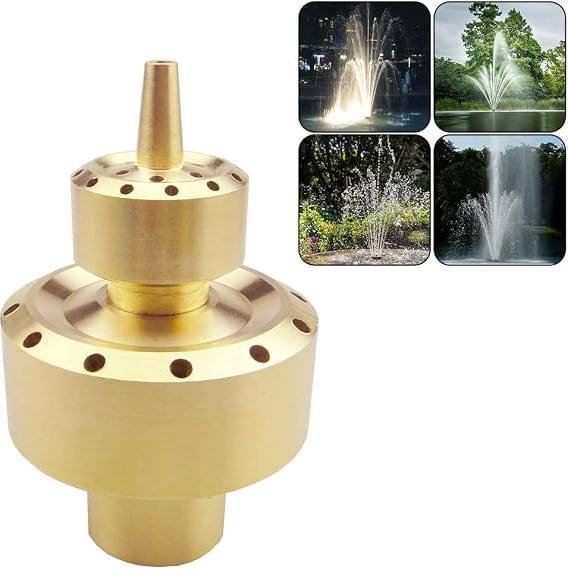
Jet nozzles throw clear streams, fan nozzles open wide sheets, a peacock fountain nozzle layers decorative patterns, mushroom nozzles settle into smooth domes, and a foam nozzle stacks dense white columns. The best pick for any spray pattern is therefore the one that fits the site, since MOKA Fountain’s guide ties the final choice to flow, head, pond size, wind, lighting, and maintenance.
- What Are the Common Types of Fountain Nozzles?
- How Do You Select the Best Fountain Nozzle?
- How Should You Maintain Fountain Nozzles and Keep Them Safe?
- Which Fountain Nozzles Give a Wide, Fan-Shaped Spray for Hotel Ponds?
- How Can Fountain Nozzles Use Less Water and Energy?
- What Fountain Nozzle Selection Mistakes Should You Avoid?
- What Information Should You Send a Fountain Manufacturer?
- Which Are the Best Fountain Nozzles for Spray Patterns?
- What Are the Best Water Fountain Nozzle Types for a Shallow Hotel Pond?
- Can One Pump Operate Different Fountain Spray Heads?
- Are Musical Fountain Nozzles Different from Decorative Nozzles?
I have stopped trusting product names, because two nozzles sold under the same label can behave very differently once a pump pushes water through them. Performance data is the safer yardstick: flow, pressure, and the actual spray height at the pond in question.
Site conditions decide whether a pattern holds together. A tall column that looks sharp in a brochure can turn into wind drift on an open plaza, with splash landing on paths nobody planned to wet. Poor water quality adds another problem, because dirty water can choke the nozzle opening and spoil the shape you paid for.
What Are the Common Types of Fountain Nozzles?
Fountain nozzles are classed by the shape of water they produce, and the usual families are vertical jets, fan sprays, mushroom films, glass-smooth columns, and rotating heads.
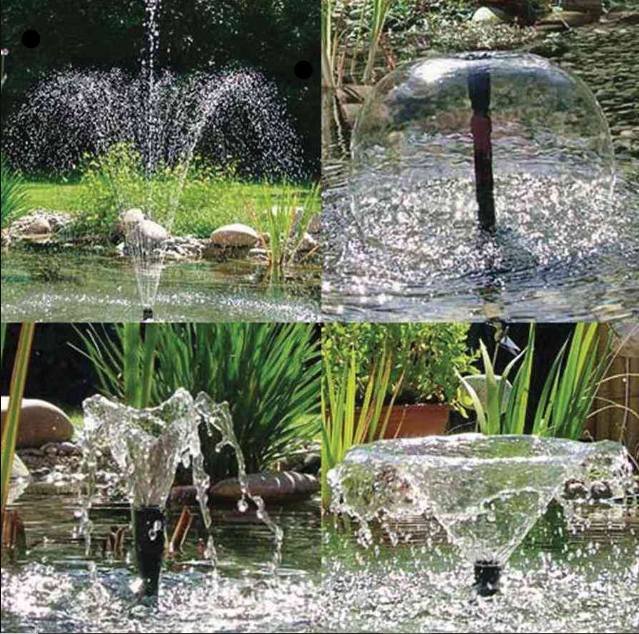
Start from the required pattern, because one pump can feed very different shapes. Tall spray jets deliver the drama and suit city squares and theme parks, while a fan nozzle gives a triangular spread that is often ringed around a basin. When water leaves a nozzle in laminar flow, the column reads like glass, and MOKA Fountain files crystal jets and laminar jets under quiet architectural settings such as hotel fountains.
| Nozzle | Water shape | Usual setting |
| Jet nozzle | Tall, narrow stream | Large musical-fountain schemes, city squares |
| Fan nozzle | Uniform triangular curtain | Rings or groups around a basin edge |
| Mushroom nozzle | Circular water film | Entrances and restaurants |
Heads on moving mechanisms can tilt jets, and rotating nozzles change pattern rhythmically, which TNC Fountain says suits villas, parks, and public squares. A nozzle that fans several layered streams from one hub reads as decorative rather than architectural.
The setting changes the shortlist. A musical fountain groups and programs its nozzles, while a tank-less dry fountain needs heads that work without a surrounding basin. Combining mixed nozzle types in one basin is how MOKA says a designer fits a show to its site, and on projects I judge each family by productivity: how quickly it installs and how rarely it needs attention.
How Do You Select the Best Fountain Nozzle?
A fountain nozzle is selected by fixing the water effect first and then confirming that its flow, head, and controls fit the pump and the pond.
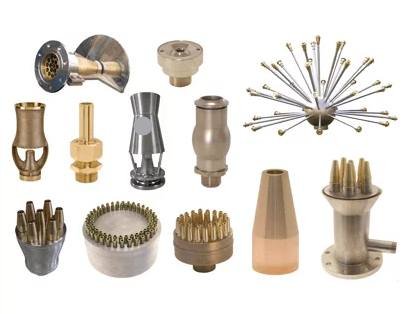
Describe the desired spray shape in plain terms, such as tall or low, calm or lively, before opening any catalog, then settle the preferred material and the nozzle positions on the site plan. Rank nozzles by connection size alone and you will miss what matters; MOKA Fountain asks for verified hydraulic figures instead.
Nozzles with compatible flow and head requirements can share one pump, while effects with very different demands call for separate pump groups, according to MOKA. In ponds, available width can matter more than maximum height, so the checks below come before any purchase.
| Check | What to confirm |
| Pond dimensions | Length, width, edge distance, and nearby structures, with the full spray kept inside the water area |
| Pump flow | Flow per nozzle multiplied by the number of nozzles, compared with what the pump delivers |
| Operating head | The pressure each nozzle needs plus losses in the pipework, checked against the pump |
| Control plan | Pumps, valves, lights, and electrical control agreed together before installation |
Oversized heads invite water waste, which is why TNC Fountain lists the volume of water a nozzle draws, alongside spray pattern and maintenance profile, as a sizing criterion.
How Should You Maintain Fountain Nozzles and Keep Them Safe?
Fountain nozzles last longest when their materials suit the water and their layout keeps spray away from people and property.
Material choice does most of the preventive work. Stainless steel and brass give durability and corrosion resistance, while plastic nozzles are lighter but may wear sooner, according to Robots Dynamic’s article. TNC Fountain adds that the metal must stand up to chlorinated or chemically treated water.
Fine openings are the weak point. MOKA Fountain advises matching filtration to the smallest nozzle opening and warns against using small-opening nozzles without it. Water temperature matters as well, since colder water may change how certain nozzles operate.
A simple routine keeps the water feature dependable:
- Plan access for cleaning at the design stage, within the project’s maintenance constraints.
- Inspect each nozzle and the piping feeding it for wear.
- Clean the openings and confirm the spray pattern still matches the design.
- Record what you found so changes in the pattern are caught early.
Public safety is a separate test. TNC Fountain says nozzles must be placed so uncontrolled spray does not reach walkways, and MOKA tells designers to consider nearby doors, seating, vehicles, and polished floors.
Which Fountain Nozzles Give a Wide, Fan-Shaped Spray for Hotel Ponds?
A fan nozzle is the first option when hotel ponds need a wide, fan-shaped spray at modest height, because it broadens the display without needing a tall jet.
Low fan spray nozzles can fill a long frontage while keeping the visual effect wide, and I judge their aesthetics from the guest’s eye level rather than from the drawing. The same logic extends to reflecting pools, where a broad, low spray tends to protect the still surface.
Measure the pond before trusting any catalog shape. Record the pond width, confirm the minimum water depth, and check submergence requirements, because some nozzles work independently of surrounding water level and others do not, as MOKA Fountain explains. Keep the whole spray inside the water area, leaving margin for the prevailing wind.
Layout details finish the decision. Site drawings and a layout plan show where pedestrian flow passes, how the installation height relates to the surface, and what desired sound suits guests nearby, such as a restaurant courtyard that needs quiet running.
How Can Fountain Nozzles Use Less Water and Energy?
A fountain nozzle uses less water and energy when the pump and hydraulic equipment are sized to its real operating points.
MOKA Fountain gives the arithmetic: total flow equals the number of nozzles multiplied by the flow per nozzle, and the calculated duty point should be checked against the pump curve. TNC Fountain pairs that with operating pressure and the volume of water drawn, which it labels debit, as sizing criteria.
Upkeep protects efficiency. TNC Fountain names scaling and internal blockage among the threats to steady nozzle performance, recommends a modular design that opens easily, and calls for scheduled servicing to extend equipment life. Robots Dynamic adds that low water levels stress the pump and can lead to malfunction.
Scale shows why sizing matters. High-throw nozzles can project water as high as 150 meters on large installations, according to TNC Fountain, mainly in reservoirs and lakes, which is far beyond what any courtyard needs.
What Fountain Nozzle Selection Mistakes Should You Avoid?
The main selection mistakes are choosing from a photograph, overlooking the hydraulics, and treating lighting and controls as afterthoughts.
Fountain Nozzle Selection
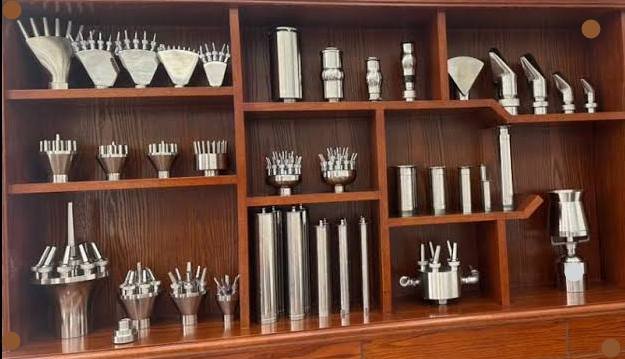
Check the real spray envelope rather than trusting an image, and leave margin between the spray edge and the pond edge. On the hydraulic side, MOKA Fountain says required pump head includes the pressure each nozzle needs plus the elevation difference, pipe friction, filters, valves, and fittings. Effects with very different needs are easier to manage in controlled zones.
For shows, confirm that pumps, valves, lights, and software can deliver the planned choreography, and place lighting before the heads are fixed, not after.
Numbers circulate freely in this field, so handle them with care. A republished article on Robots Dynamic’s site attributes a 25% gain in customer satisfaction to a 2022 industry report and credits the International Water Association with property-value gains of over 15% for effective displays. I could not trace either figure to an original publication, so I treat them as claims, not facts.
What Information Should You Send a Fountain Manufacturer?
Send a fountain manufacturer a complete site brief covering the pond, the effect you want, the conditions it will face, and the equipment already installed.
A useful brief includes:
- Pond size: length, width, and operating depth.
- Effect: target height and width, plus any special head such as a misting nozzle.
- Conditions: wind exposure and how close paths and buildings sit.
- Equipment: existing pump and pipe details, and a sketch of the site.
- Lighting and control: RGB lighting, a color changing nozzle if wanted, dedicated controllers, and smart timers.
- Water source: how it is supplied and treated.
Climate details matter as much as dimensions. In cold regions, state your winterizing plan, because freezing can cause cracks, per Robots Dynamic. If trees overhang the pond, mention falling debris that could clog small openings. With this information, MOKA says, the manufacturer can coordinate nozzles with the rest of the system instead of treating the nozzle as an isolated component.
Which Are the Best Fountain Nozzles for Spray Patterns?
The best fountain nozzle for a given spray pattern is the one whose output matches the design: a comet nozzle for one tightly controlled straight stream, a cascade nozzle for a voluminous, frothy, conical column, and a dandelion nozzle for a spherical burst from thin spokes. TNC Fountain’s puffy nozzle gives a tubular output that suits rhythmic shows. Soft umbrella shapes calm entrances, according to MOKA Fountain, while a Bell nozzle gives a rounded, gentle spray that may lack height, per Robots Dynamic. A circular arrangement called a flying saucer produces a UFO-like spray that can rotate or bloom. Before committing, compare resource use and water consumption, because TNC lists the volume of water a nozzle draws as a selection criterion.
What Are the Best Water Fountain Nozzle Types for a Shallow Hotel Pond?
For a shallow basin at a hotel, choose nozzles that give width at moderate height, such as fan or mushroom types, rather than tall jets. In a long shallow pool, a broad spray can create an illuminated background, and a bubble fountain nozzle adds the gentle, tranquil ambiance Robots Dynamic describes. Lower effects and larger streams are easier to control near entrances and restaurants, which also keeps noise modest, and generous distances to paths or buildings help further. Where children and the elderly pass, TNC Fountain urges designs that limit slipping, using protective covers or installing the nozzle below walkway level. A basin with closed-loop recirculation also supports environmental stewardship, which TNC ties to nozzle choice.
Can One Pump Operate Different Fountain Spray Heads?
One pump can run different spray heads only when their flow and pressure needs are close enough that no effect is starved or overpowered. Multi-stream heads such as the cluster, crown, finger, and flower nozzle (also called the Salt Shaker) each spread water differently, so check them against the pump specifications. Adjustable current nozzles add tilting jets that change a show’s demand, and MOKA warns that asking a pump to drive conflicting effects invites trouble. TNC Fountain says pressure regulators and high-efficiency pumps help manage how much water and energy a system uses.
Are Musical Fountain Nozzles Different from Decorative Nozzles?
Nozzles for musical shows differ mainly in how they are driven: some are ordinary jets run in programmed groups, while others rely on fast valves, so compatibility matters more than the product label, according to MOKA Fountain. Share your power information with the supplier so hydraulic and electrical parts can be matched. TNC Fountain notes that sensors help manage water and energy use. Where nozzles move, Robots Dynamic recommends a periodic silicone-based lubricant on rotating parts and cleaning with a soft brush.