
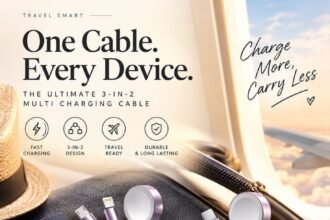


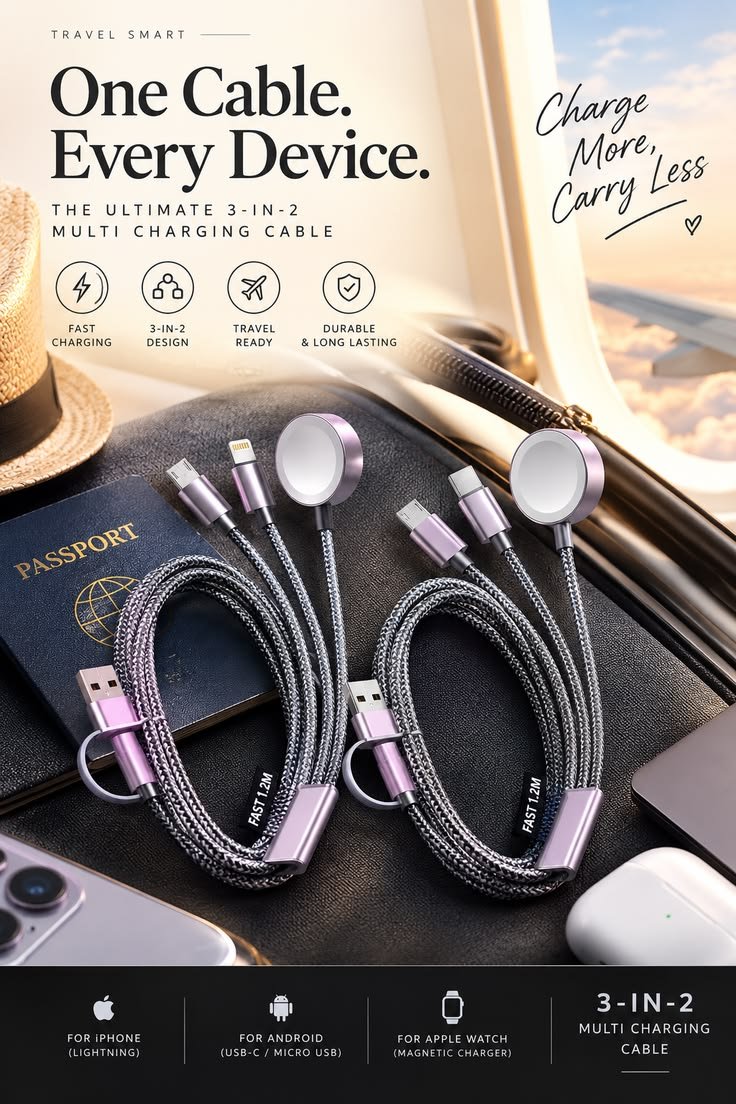
The stack-in-charger 3 in 1 usb cable -classy chargers is a braided multi-device charging cable built to cut clutter by combining Lightning, USB-C, and Micro-USB support into one easy everyday cord, making it especially useful for home, office, car, travel, and bedside use.
- What Is the Stack-in-Charger 3-in-1 USB Cable From Classy Chargers and Who Is It For?
- What Does a 3-in-1 Charging Cable Actually Do?
- Can One Cable Really Replace Three Separate Chargers?
- Which Devices and Connector Types Work With This Cable?
- How Fast Does This 3-in-1 Cable Charge and What Power Does It Support?
- Is This Cable Only for Charging or Can It Transfer Data Too?
- How Durable Is the Cable and What Is It Made From?
- Is This a Good Charging Cable for Travel, Cars, and Small Spaces?
- Why Is a 3-in-1 Cable Useful in Shared Homes, Offices, and Family Setups?
- What Do You Get, What Colors Are Available, and How Much Does It Cost?
- Is It Safe for Everyday Charging and Battery Health?
- How Is This Different From 3-in-1 Wireless Charging Stations With Built-In Power Systems?
- Does This Kind of Charging Setup Need Smart App Controls?
- How Much Clutter Can a 3-in-1 Cable Help You Eliminate?
- Is It Worth the Price Compared With Other Charging Options?
- Can Using One Multi-Charging Cable Reduce Waste?
- Is This Cable Future-Proof Enough for Newer Devices and Charging Trends?
- How Does a Simple 3-in-1 Cable Compare With Premium 3-in-1 MagSafe Chargers?
- Is It Better for Bedside Charging or Travel Use?
- What Are Real Buyers Saying About This Cable?
- What Is a 3-in-1 Charging Cable?
- What Devices Can You Charge With It?
- Can the Same Cable Charge Apple and Android Devices?
- Is This Cable Good for Travel?
- How Fast Will It Charge Your Devices?
- Is It Durable Enough for Everyday Use?
- Can It Transfer Data?
- Does It Work With Car Chargers and Power Banks?
- Will It Still Work If Your Phone Has a Case On?
- What Comes in the Box?
- Do 3-in-1 Wireless Chargers Work With Every iPhone Case?
- Are Cables Faster Than 3-in-1 Wireless Charging Stations for iPhones?
- What’s the Difference Between Qi and MagSafe for iPhone Charging?
- Can a 3-in-1 Wireless Charger Harm Your iPhone Battery?
- Are 3-in-1 Wireless Charging Stations Worth Buying If You Don’t Use an iPhone?
I usually tell people not to start with style when they shop for a cable, but this is one of those exceptions where the product makes practical sense before it even tries to look good. A single cord can handle an Apple phone, an Android backup, or older accessories, and that matters more than most shoppers expect until their drawer turns into a knot of duplicates.
The smarter way to look at the Classy Chargers offer is not as a novelty, but as a compact answer to the same daily irritation: too many cords, too few working connectors, and too much switching between devices. The Periwinkle option gets attention, but the real value is that one neatly finished cable can cover more routine charging than three separate ones.
What Is the Stack-in-Charger 3-in-1 USB Cable From Classy Chargers and Who Is It For?
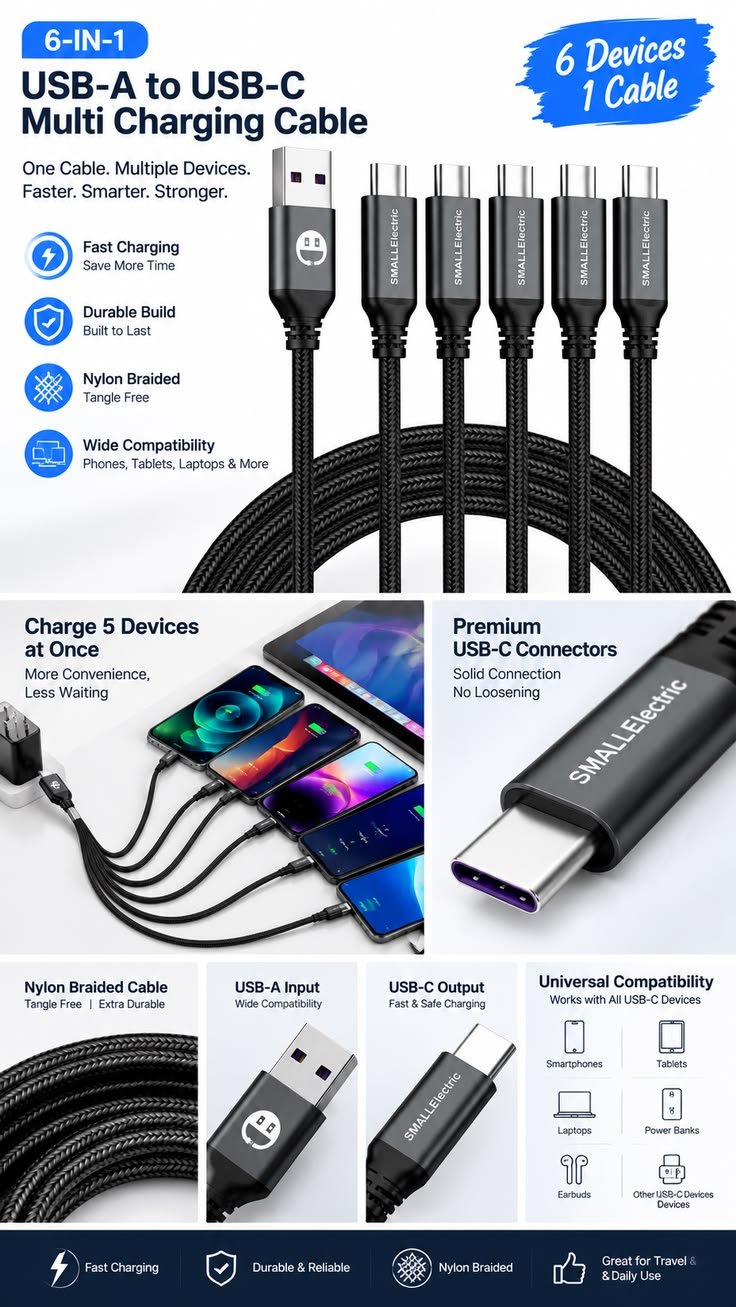
The Stack-to-Charge cable from Classy Chargers is for people who want a clean, space-saving, and travel-friendly way to charge mixed devices without carrying a pouch full of cords.
In practice, the appeal is broad. Someone using a newer phone, a pair of wireless buds, and an older Bluetooth accessory gets immediate convenience because the selection of tips removes a lot of guesswork. I have seen this matter most in houses where the same charging spot serves a shared family setup rather than one device owner.
The shopping intent is simple: buyers want one cord that feels less messy than the typical spare-cable pile. For that user, the stack-in-charger 3 in 1 usb cable -classy chargers solves the daily mismatch between modern charging habits and the aesthetically messy reality of loose cords beside a nightstand, on a desk, or in a bag.
What Does a 3-in-1 Charging Cable Actually Do?
A 3-in-1 charging cable combines several device standards into one practical tool, letting one cord cover more than one charging routine.
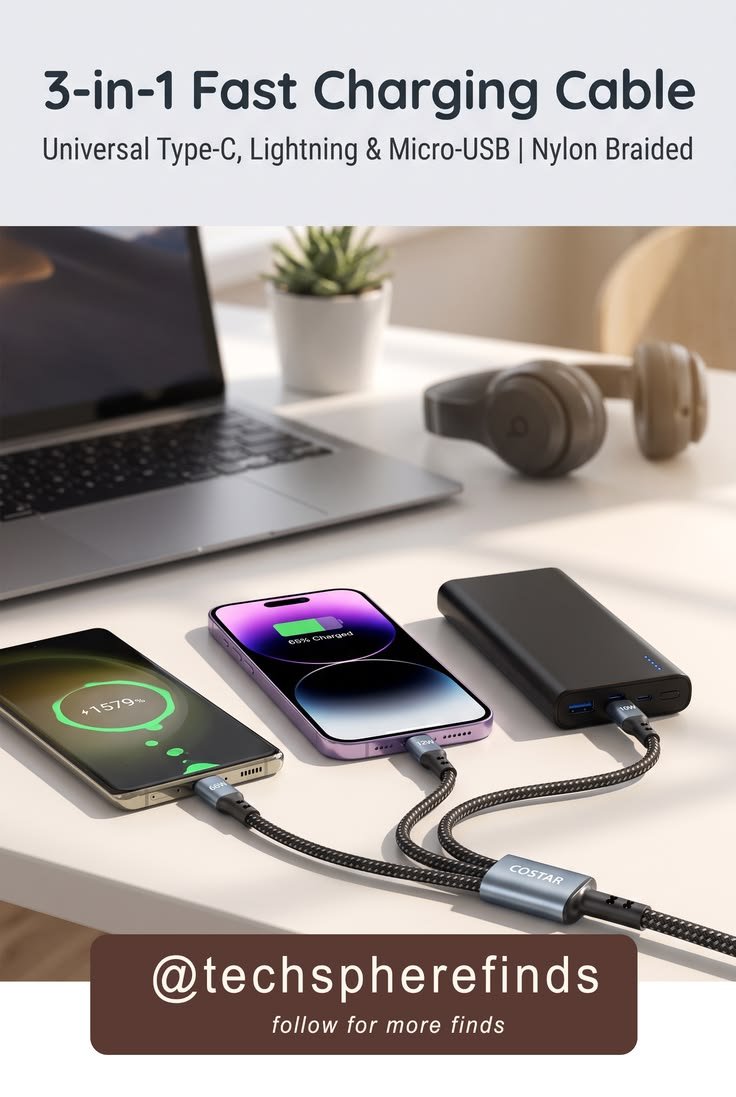
The easiest way to think about it is functional consolidation. Instead of carrying a smartphone charger, a second tablet line, and a third lead for smaller electronics, one cable becomes the handoff point between devices. That makes more sense today because users move between portable gear, backup phones, audio accessories, and older gadgets throughout the week.
A good 3-in-1 setup is not about novelty; it is about reducing friction. If a cord handles the hardware you already own, then the benefit is less searching, less switching, and less dead space in your bag. That is the real answer behind why these products keep showing up in commuter kits and casual workspaces.
Can One Cable Really Replace Three Separate Chargers?
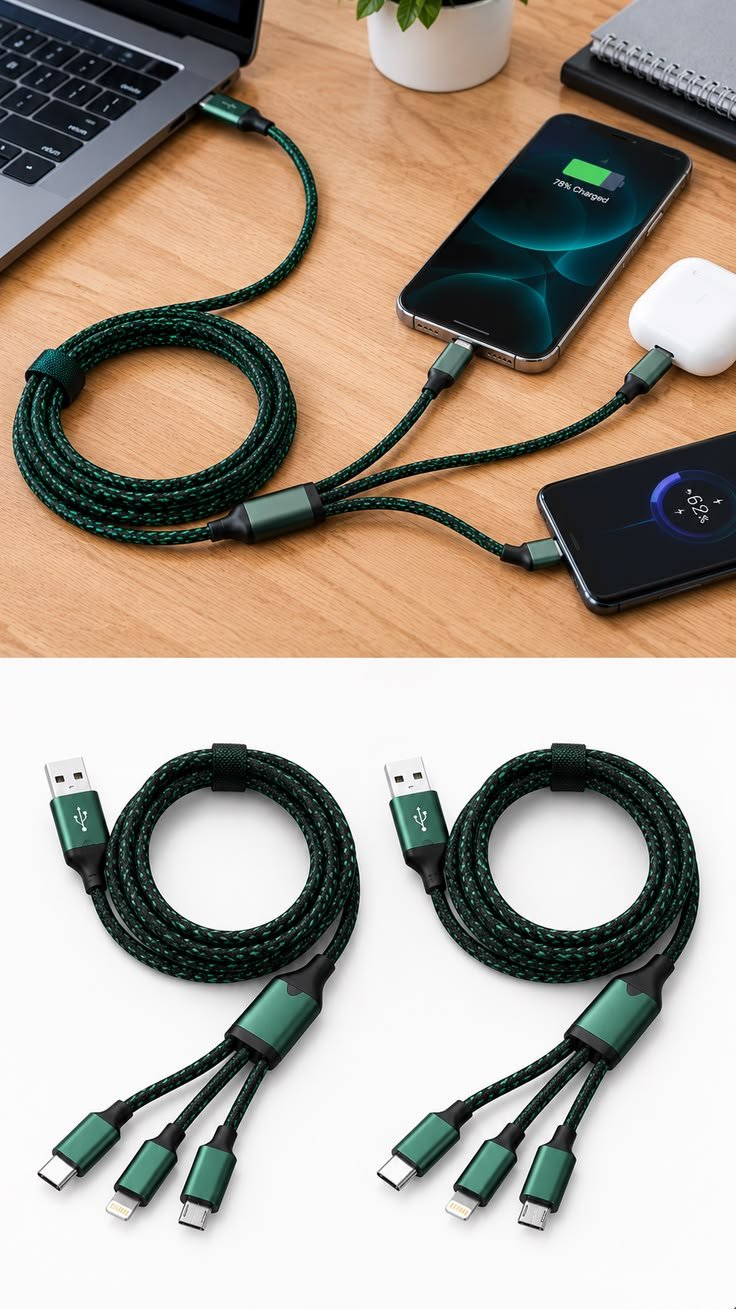
Yes, one 3-in-1 cable can replace three everyday charge lines if your devices match the included tip set.
The simplest method works in order:
- Identify the devices you charge most often.
- Replace the duplicate cords that only serve one narrow purpose.
- Assign the new cable to the place where you switch between devices most.
I have done this with family charging stations, and the biggest improvement is not speed; it is consistency. A drawer stops becoming a storage bin for random spares, and one cable can move from an older speaker to a backup phone to a travel battery without interruption.
That does not mean every specialized setup disappears. Laptops, very high-wattage devices, or niche data tasks may still need dedicated hardware. But for ordinary device rotation, one space-saving cable often replaces the messy core of a three-cable routine.
Which Devices and Connector Types Work With This Cable?
The cable works best for mixed everyday setups that include newer phones, older gear, and small rechargeable accessories.
From a compatibility angle, the value is in range rather than specialization. A user can move between iPhone gear, Android handsets, iPads, compact audio accessories, and small power banks without changing cords. That is especially helpful in shared rooms where several people reach for the same charger.
Here the device match is easier to scan:
- Apple: iPhone, AirPods, and some other small accessories that still rely on Lightning
- Android: newer smartphones and tablets that use USB-C, plus older items that still use Micro-USB
- Power Sources: USB-A wall bricks, car plugs, laptop ports, and portable battery packs
This is why the cable suits mixed households better than a single-platform cord. It is less about a perfect ecosystem and more about surviving a real room where someone plugs in buds, someone else plugs in a spare phone, and an older gadget is still hanging around.
How Fast Does This 3-in-1 Cable Charge and What Power Does It Support?
The cable is built for ordinary device charging, with 5V, up to 2A, and a 10W maximum output rather than high-end laptop-class power.
That matters because many buyers assume every modern cord is automatically “fast.” In reality, this style of cable is aimed at stable daily charging, not advanced high-wattage protocols. If your use is earbuds, phones, small accessories, and overnight top-ups, the practical result is usually enough.
Here the useful spec snapshot is straightforward:
- Power: up to 2A
- Voltage: 5V
- Maximum Output: 10W
- Host Side: USB-A
I generally treat this as a convenience cable, not a benchmark cable. A premium wireless station may advertise 15W, and some wired systems go far beyond that, but a small everyday cable is judged better by reliability and fit than by extreme output.
Is This Cable Only for Charging or Can It Transfer Data Too?
The safest expectation is that the cable is mainly for charging, even though some product versions in this category mention data movement or transfer behavior.
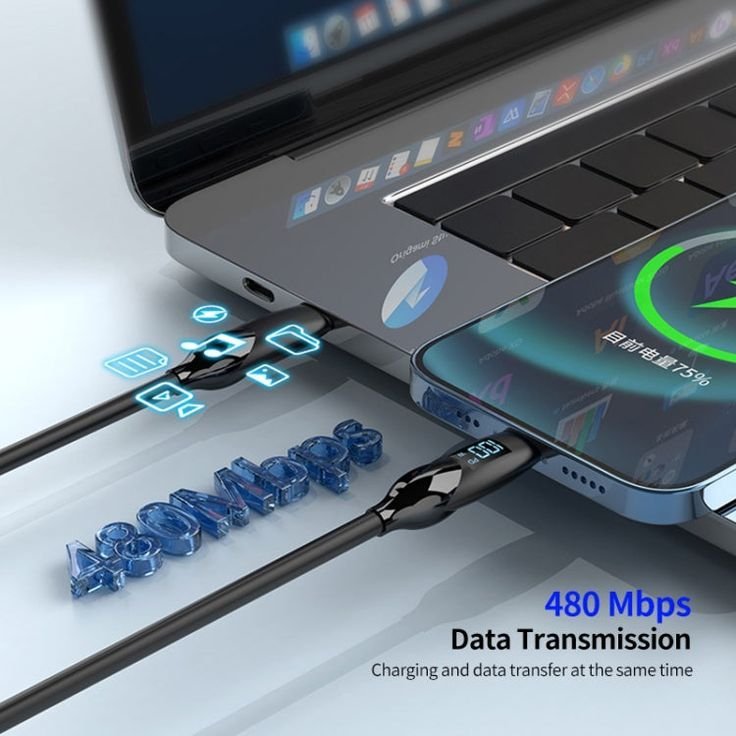
This is where buyers often get tripped up. Multi-tip products may physically connect to many devices, but that does not mean they are ideal for syncing, wired accessory workflows, or device-to-computer jobs. If someone expects CarPlay, Auto, or dependable file movement, a dedicated cable is usually the safer pick.
My rule is simple: use a broad compatibility cable for routine power, and use a purpose-built line when a device needs exact performance or capabilities. That keeps expectations realistic and avoids the common mistake of assuming all charge cables behave the same once plugged in.
How Durable Is the Cable and What Is It Made From?
The cable is positioned as a durable everyday option with a nylon braided outer layer meant to resist ordinary wear.
That outer build matters more than marketing usually admits. A cord spends most of its life being dropped into bags, bent at the connector, wrapped in a hurry, or pulled off a nightstand. A dependable braid helps with those low-drama failures that kill otherwise decent cables.
I also pay attention to how a cable feels at the ends. A more robust shell, decent flexible strain relief, and cleaner finishing usually tell you whether the cord was built for repeated use or just shelf appeal. On small household gear, the difference shows up after a few weeks, not after a year.
Is This a Good Charging Cable for Travel, Cars, and Small Spaces?
Yes, this cable makes the most sense when space is limited and the device mix changes often.
The travel case for a compact 3-in-1 cable is stronger than the speed case. In a hotel room, in a car, or beside a bed, one cord can handle enough routine charging that you stop packing spares “just in case.” That is why these products end up in commuter bags and side drawers more often than premium deskside setups.
I have found the best use is not international packing glamour; it is ordinary mobility. A travel kit works better when the charging gear does not demand a separate pouch, and a bedside corner works better when one cable replaces the visual noise of several. That is a small win, but in daily use it adds up quickly.
Why Is a 3-in-1 Cable Useful in Shared Homes, Offices, and Family Setups?
A 3-in-1 cable is useful in shared spaces because different people can charge different devices without negotiating over the “right” cord.
That sounds minor until you live with it. In many family or office situations, one person uses Apple, another uses Android, and a random small device still wants an older connector. The wrong cable problem is rarely technical; it is just repetitive and annoying.
I like these cables most in semi-public zones: a kitchen counter, a living room shelf, a guest bedroom, or a hot-desk area. A mixed-device cord reduces the chance that someone leaves a phone at 3% because the available cable only fits someone else’s hardware.
What Do You Get, What Colors Are Available, and How Much Does It Cost?
The package is straightforward: one 3-in-1 cable product in a chosen color, sold at $14.50, with 2 posted reviews on the product page and stock listed at 398 units at the time the fact set was collected.
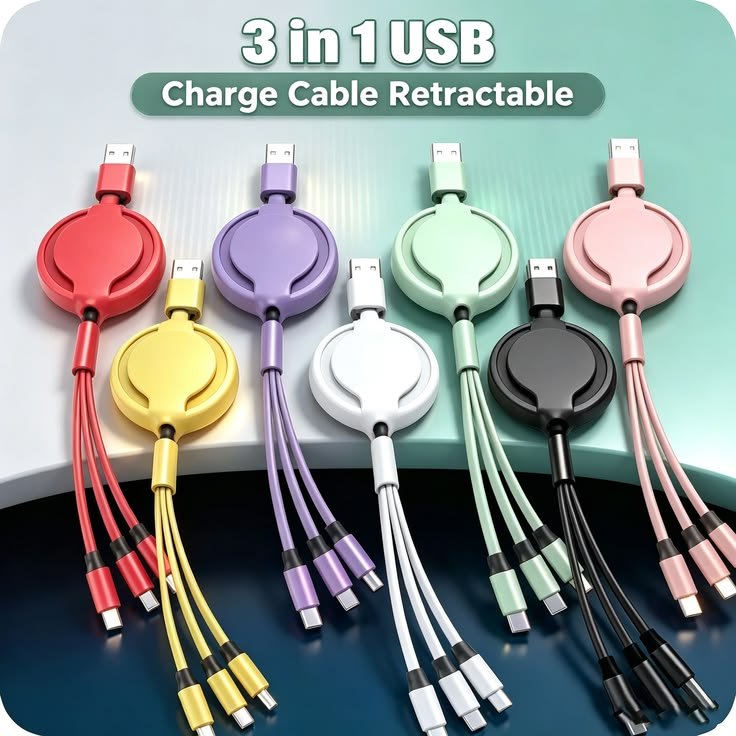
That matters because some shoppers overcomplicate cable buying. This is not a huge bundle ecosystem play; it is a simple consumer item where color, price, and basic build are the main decision points. The Periwinkle version is just one of several visual choices, so color can be matched to a travel pouch, bedroom setup, or office preference.
| Item | Detail |
| Price | $14.50 |
| Reviews | 2 |
| Stock | 398 |
| Finish Style | Braided |
| Color Examples | Black, Blue, Red, Gold, Silver, Periwinkle |
The broader multi-cable market includes lower-price products and higher-priced branded options, but this pricing sits in the zone where people are usually choosing on feel and convenience rather than raw specification bragging rights.
Is It Safe for Everyday Charging and Battery Health?
For everyday small-device use, the cable is safe when paired with a normal power source and used within its intended output range.
Battery anxiety is understandable, but most problems blamed on a cable are really about bad adapters, damaged ports, or unrealistic expectations. For a low-power multi-tip cable, the sensible concerns are heat, fraying, and poor fit—not dramatic battery destruction. If the cable stays physically sound and the charger brick is reliable, the risk profile is routine.
My practical advice is boring on purpose: avoid crushed bends, replace worn cords early, and do not pair a convenience cable with mystery accessories of uncertain quality. That approach matters more for battery health than exaggerated claims about any one cord being magical or dangerous.
How Is This Different From 3-in-1 Wireless Charging Stations With Built-In Power Systems?
A simple cable and a wireless station solve different problems, even when both are called 3-in-1 solutions.
The cable is about connector flexibility; the station is about dock-style convenience. A product like the ISDT Zip uses an integrated adapter, a two-pin power input, and a more engineered built-in charging platform. That is a very different category from a lightweight cable that just helps you connect different devices to one ordinary charger.
The hardware gap is large. Some stations use GaN, platform cooling, fixed systems, and even worldwide voltage support, while a cable stays intentionally simple. If your goal is packability and connector coverage, the cable wins. If your goal is a bedside dock with magnetic placement, then the station is solving another problem entirely.
Does This Kind of Charging Setup Need Smart App Controls?
No, a cable like this does not need smart controls, because the product is meant for direct physical charging rather than monitored power management.
App-managed charging can make sense for a dock or station with several internal modules, but it is unnecessary for a passive cable. Systems like ISDLink exist because some multi-device charging stations track real-time consumption, cooling status, and internal power behavior. A braided 3-in-1 cable has no reason to behave that way.
That difference is worth calling out because buyers sometimes compare unlike products. If what you want is a simple, dependable cable, then not having app features is actually part of the appeal, not a missing premium layer.
How Much Clutter Can a 3-in-1 Cable Help You Eliminate?
A single 3-in-1 cable can remove a surprising amount of visual and functional mess from a charging space.
The main gain is not square footage in the abstract; it is fewer dangling cords in places where people actually look every day. A nightstand, a coffee table corner, or a work desktop feels calmer when charging is reduced to one visible line instead of a small cable pile.
A practical reset works like this:
- Clear the charging area completely.
- Keep only the charger brick you actually use.
- Replace the duplicate cables with one multi-tip cord.
That kind of cleanup does not sound revolutionary, but the visual effect is immediate. In small spaces, reducing even one or two visible extras can change how tidy the setup feels.
Is It Worth the Price Compared With Other Charging Options?
At $14.50, the cable is worth it for buyers who need compatibility and convenience more than peak speed or premium docking features.
This is where comparison gets useful. A premium magnetic station may sit near $59.99, some branded adapter-cable combinations land at $29.99 or more, and cheap generics can dip lower. But low price alone does not settle the question, because the real purchase decision is whether you want one reliable multi-tip cord or a larger, more specialized charging setup.
| Option | Typical Strength | Tradeoff |
| This Cable | Easy compatibility, low clutter, low price | Not high-power specialty charging |
| Separate Branded Cables | Better task-specific fit | More mess, higher total cost |
| Wireless Station | Dock convenience | Bigger footprint, higher price |
For someone who values function over gear theater, the math is fairly plain: a mid-low priced multi-tip cable covers more common charging moments than most people need to admit.
Can Using One Multi-Charging Cable Reduce Waste?
Yes, using one cable across more devices can reduce excess cord buying and help cut small-scale household waste.
The sustainability angle is often overstated, but it is still real. If a person stops buying repeated single-purpose spares, fewer cheap cords end up in drawers and eventually in the trash. That is not the same as solving global e-waste, but on a personal scale it matters.
I prefer to frame this modestly. The environmental gain comes from buying fewer replacements, storing fewer duplicates, and making one decent cable do more useful work. For practical consumers, that is a better sustainability story than flashy green branding.
Is This Cable Future-Proof Enough for Newer Devices and Charging Trends?
The cable is future-resistant in a practical sense, but not fully future-proof in the high-end standards sense.
Including USB-C already keeps it relevant for a lot of newer hardware, and that matters because connector trends keep moving away from older proprietary paths. But that does not mean the cable suddenly becomes a top-tier answer for every new charging standard, especially as power expectations and device ecosystems evolve.
My view is simple: for ordinary phones and small accessories, the format still makes sense for years. If your concern is next-wave flagship charging, magnetic alignment, or ecosystem-specific innovation, then you are comparing a convenience cable against technologies built for another tier.
How Does a Simple 3-in-1 Cable Compare With Premium 3-in-1 MagSafe Chargers?
A simple 3-in-1 cable is better for portability and device flexibility, while a premium MagSafe charger is better for docked bedside use.
That contrast gets lost because both products use the same “3-in-1” label. A cord is a utility tool; a magnetic station is furniture-grade charging gear. Models from Anker, Belkin, BoostCharge, Magnitis, Simpli, or Nomad often emphasize magnetic placement, materials, and fixed-position use rather than bag-level convenience.
In real life, I would not treat them as substitutes. The cable is the better answer when movement and connector coverage matter. A premium station is the better answer when you want a polished charging home for a phone, watch, and earbuds in one fixed spot.
Is It Better for Bedside Charging or Travel Use?
The cable is more useful for travel than for creating a polished bedside dock, although it still works well beside a bed.
At a bedside, a cable remains a cable; it charges well, but it does not organize devices into a display-style setup. On the road, though, its strengths are more obvious. The same cord can move between devices without demanding space, which is why travel use feels like the more natural fit.
Personally, I keep this kind of cable in motion rather than permanently staged. A bedside area benefits more from a station if appearance matters, while a bag or hotel room benefits more from one flexible cord.
What Are Real Buyers Saying About This Cable?
Real buyer feedback in the extracted material is brief but consistently positive, focusing on convenience, compatibility, and everyday usefulness.
The comments do not read like spec-sheet enthusiasts talking to each other. Instead, the tone is practical: a buyer says the cable works across devices, another likes the multiple tip types, and another mentions keeping extras around the house. That kind of feedback usually tells me the product is doing its ordinary job well.
For product interpretation, I trust those plain comments more than inflated copy. When shoppers repeat the same idea—easy to use, useful across devices, convenient to keep around—that is often the clearest signal of what the item actually does in real life.
What Is a 3-in-1 Charging Cable?
A 3-in-1 charging cable is one cord that carries multiple device-tip options so you can charge different devices without packing separate lines. A setup like Link Trio or a similar 3 1 design usually includes common tips for daily tech and works best when you want fewer cables in regular rotation. That is why these products are popular for desks, nightstands, and travel pouches.
What Devices Can You Charge With It?
You can charge most small everyday devices that match the included tips, including smartphones, tablets, wireless earbuds, and power banks. The practical advantage is range: one cable can cover Apple and Android gear plus smaller rechargeable accessories. For ordinary household use, that is often enough to replace a messy group of separate charge leads.
Can the Same Cable Charge Apple and Android Devices?
Yes, the same cable can charge both Apple and Android hardware if the tip set includes the right connectors. That mixed-platform flexibility is why a product like this suits households, shared desks, and daily travel better than a one-brand cable. The main benefit is simple: fewer cords, fewer swaps, and less friction between devices.
Is This Cable Good for Travel?
Yes, this cable is a solid travel-friendly option because one single-cable design reduces what you need to pack. It works with USB-A wall bricks, common chargers, laptops, and portable power sources, so it fits normal hotel, airport, and car charging routines. The biggest win is not speed; it is packing simplicity.
How Fast Will It Charge Your Devices?
The cable is meant for steady everyday charging rather than extreme output. It supports practical phone and accessory charging, and actual speed will vary depending on the device and charger source. For overnight use, office top-ups, and casual daytime charging, that level is usually enough without trying to be a high-performance specialist.
Is It Durable Enough for Everyday Use?
Yes, the cable is designed to be durable enough for routine use because the nylon braided finish helps it resist normal pulling and bending. That outer layer also helps against cosmetic wear from daily use at home, at work, or on the go. As with any cord, careful handling extends life.
Can It Transfer Data?
You should treat the cable as primarily a charging product, even if some users expect transfer features. Multi-tip cables can show mixed performance, and behavior may vary by connector. If a setup is clearly charging-only, that is usually the safest assumption unless a product page explicitly promises dependable data use.
Does It Work With Car Chargers and Power Banks?
Yes, the cable works with car chargers and portable power banks as long as the power source matches the host connection. It also works with ordinary wall chargers and some laptop ports, which makes it practical for moving between home, car, and travel use. That broad compatibility is one of the main reasons people buy this format.
Will It Still Work If Your Phone Has a Case On?
Usually, yes, the cable will still work with most phone cases. The only real variable is connector access, since thick case design choices can narrow the opening around the port. If a case leaves normal room around the charging area, the cable should connect without much trouble.
What Comes in the Box?
What comes in the box depends on the exact product listing, but the practical expectation is the selected charging cable itself with the stated color option. In the broader multi-cable category, some products are sold as a 3-pack, allowing buyers to keep one at home, one at work, and one in a bag or car. Always check the specific listing before buying.
Do 3-in-1 Wireless Chargers Work With Every iPhone Case?
No, 3-in-1 wireless chargers do not work equally well with every iPhone case. Very thick cases, metal-backed shells, or card-holder styles can interfere with magnetic contact, and some products list around 3mm as a safer maximum thickness. Good MagSafe fit depends on cleaner alignment, not just surface contact.
Are Cables Faster Than 3-in-1 Wireless Charging Stations for iPhones?
Yes, wired charging is generally faster than multi-device wireless setups for iPhones. In the extracted facts, wired charging can reach around 20-30W, while many magnetic wireless systems sit closer to 15W. That speed difference matters when time matters, even though bedside convenience may still make wireless worth using overnight.
What’s the Difference Between Qi and MagSafe for iPhone Charging?
The main difference is that MagSafe uses magnets for more reliable placement, while standard Qi charging does not. That alignment advantage helps with consistent contact and can support better positioning for iPhone charging. In plain use, Qi is broader and simpler, while MagSafe is more precise for compatible Apple hardware.
Can a 3-in-1 Wireless Charger Harm Your iPhone Battery?
A decent 3-in-1 wireless charger should not automatically harm an iPhone battery, but poor accessories and unmanaged heat are valid concerns. Products with better protection and sensible power control aim to reduce overheating and overcharging, which supports longer-term battery condition. In practice, charger quality matters more than the 3-in-1 label itself.
Are 3-in-1 Wireless Charging Stations Worth Buying If You Don’t Use an iPhone?
They can be, but only if the station genuinely supports your device mix and you accept the tradeoffs. Many models are optimized for Apple ecosystems, so non-Apple users often won’t get the same magnetic fit or charging speeds. For some people they are still worth buying, but a universal cable may make more sense than a platform-focused dock